Goddess Money: How Spiritual Women Are Rewriting the Rules of Financial Success
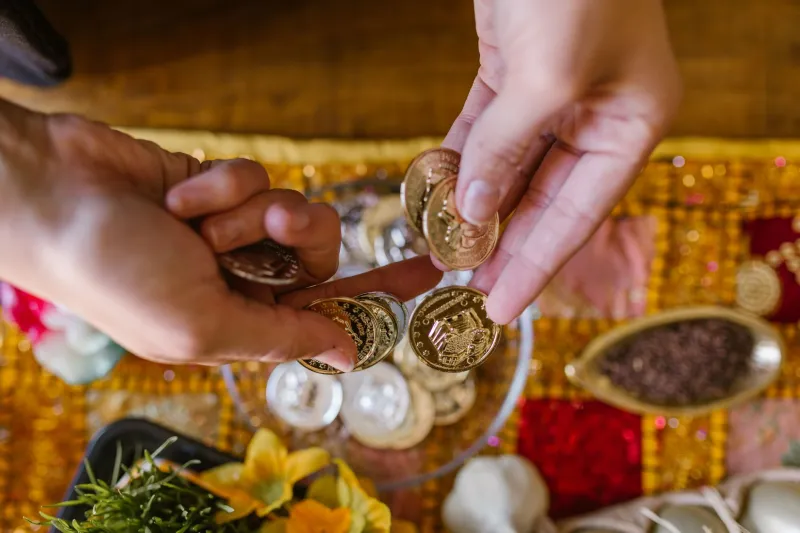
Let's be honest: the standard script for financial success has never really been written for us.
Grind harder. Sleep less. Optimize everything. Be available at all hours. Monetize your passion until it stops feeling like one. The hustle culture narrative is loud, relentless, and — if you're paying attention — quietly exhausting in a way that goes bone-deep.
A growing number of women across the US are starting to push back. Not by checking out of ambition entirely, but by completely reimagining what abundance is supposed to look like. They're drawing on goddess energy principles, intuitive business practices, and a whole lot of boundary-setting to build financial lives that actually feel good to live inside.
This is the divine feminine economy. And it looks nothing like what LinkedIn told you success should be.
The Problem With Productivity as a Personality
Hustle culture didn't appear out of nowhere. For decades, women have been told that if we just worked twice as hard as everyone else, we'd finally earn our seat at the table. And sure, ambition is sacred. Drive is real. But somewhere along the way, busyness became a status symbol — and the cost of that has been enormous.
Burnout rates among American women are staggering. According to data from the American Psychological Association, women consistently report higher stress levels than men, and working women are especially vulnerable to what researchers call "role overload" — the exhausting experience of trying to be everything to everyone all at once.
What hustle culture never tells you is this: chronic stress literally shuts down your intuition. When your nervous system is in fight-or-flight mode, the quiet inner knowing — that goddess-level guidance — gets drowned out by cortisol and calendar notifications.
You can't access your highest wisdom when you're running on empty. Full stop.
What "Abundance" Actually Means in Goddess Terms
The divine feminine relationship with money isn't about scarcity or sacrifice. Ancient goddess traditions across cultures — from Lakshmi in Hindu spirituality to Abundantia in Roman mythology — framed wealth as a natural, flowing force. Not something you clawed for, but something you aligned with.
That's a genuinely different energy than the one most of us were raised with.
In practical terms, redefining abundance through a goddess lens means asking different questions:
- Does this income stream require me to betray my values?
- Am I building wealth from a full cup, or desperately trying to fill an empty one?
- What does "enough" actually look like for my life — not my mother's, not my college roommate's?
- Is my relationship with money rooted in fear or in trust?
These aren't soft, woo-woo questions. They're strategic ones. Women who get clear on their actual values tend to make smarter, more sustainable financial decisions because they stop chasing goals that were never theirs to begin with.
Practical Strategies for Building a Values-Aligned Financial Life
Set Boundaries With Your Time Like It's Sacred (Because It Is)
One of the most radical money moves a spiritually-aware woman can make is deciding that her time has a floor — a minimum standard below which she simply won't go, regardless of the paycheck attached.
This might look like refusing to take on clients who consistently disrespect your schedule. It might mean not checking work emails after 7 PM. It might mean pricing your services in a way that reflects your actual worth rather than what you think the market will tolerate.
Boundaries aren't just emotional hygiene. They're financial strategy.
Build Multiple Streams — But Slowly and Intentionally
The goddess economy isn't anti-income. If anything, it's pro abundance in a big way. But there's a difference between building sustainable income streams that align with your gifts and frantically launching five side hustles because you're scared.
Start with one offering, one service, one creative project. Tend to it. Let it grow roots before you branch out. Sustainable wealth is built incrementally, not all at once in a panic.
Audit Your Financial Goals for Authenticity
Sit down with your money goals and ask yourself: who decided this was what I was supposed to want?
The six-figure business, the corner office, the early retirement — these aren't inherently wrong, but they're also not inherently right. Some of these goals are genuinely yours. Others are inherited ambitions from parents, culture, or social media comparison spirals.
The divine feminine economy is built on your definition of enough. That's where the real power lives.
The Energetics of Money (Yes, Really)
Here's where it gets a little mystical — but stay with me, because there's something real here.
Money is energy. It flows toward clarity and stagnates around fear. This isn't just spiritual metaphor; it's also basic psychology. When we operate from scarcity mindset, we make reactive, fear-based financial decisions. We undercharge, overdeliver, and accept less than we deserve because we're convinced there isn't enough to go around.
Shifting that energy — even just a little — changes the decisions you make. Gratitude practices, money journaling, and intentional spending reviews aren't just feel-good exercises. They're ways of literally reprogramming the beliefs that drive your financial behavior.
Goddess Xuan has talked about this before: awakening your inner divinity isn't just about meditation and moonlight. It's about showing up fully in every area of your life — including your bank account.
You Don't Have to Earn Rest
Perhaps the most radical thing the divine feminine economy asks of us is this: stop treating rest like a reward.
Rest is not what happens after you've done enough. Rest is part of the work. Recovery is productive. Stillness is strategic. The most intuitive, creative, high-level decisions tend to come not from grinding through exhaustion but from a grounded, spacious state of being.
The goddesses didn't hustle. They moved with purpose, from a place of fullness, and they rested without guilt.
Maybe it's time we did the same.